Blog
Industrial Hose Selection Guide: Engineering Criteria for Performance, Safety, and Longevity

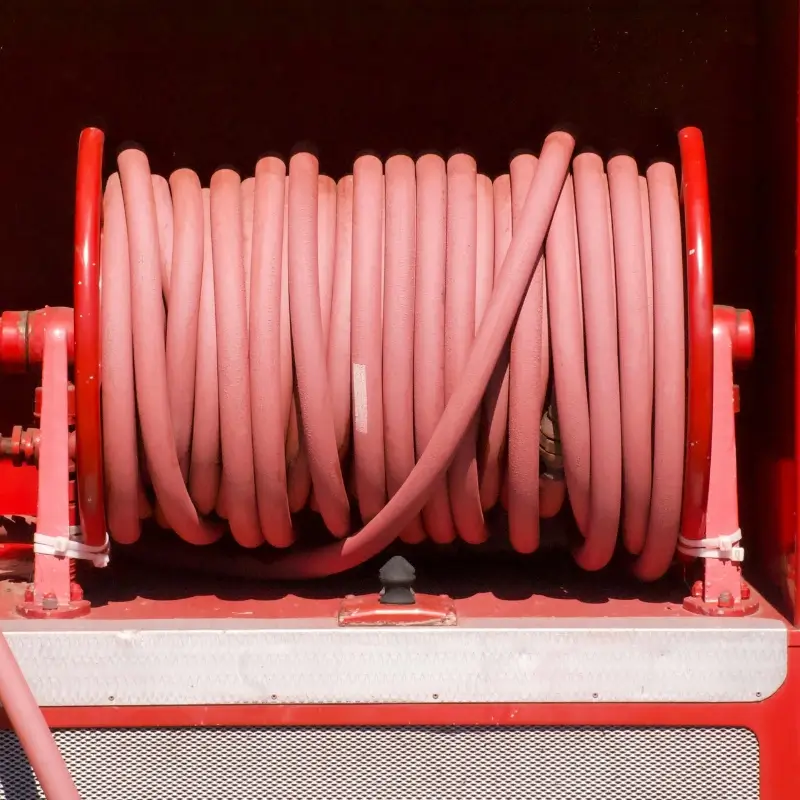
Selecting an industrial hose is not a purchasing decision — it is an engineering decision that directly impacts safety, efficiency, and lifecycle cost.
- Flow & Media Characteristics
Define:
Flow rate (m³/h or L/min)
Media type (abrasive, corrosive, viscous, gaseous)
Solid content percentage
Insight: Abrasive media (e.g. slurry, sand) requires reinforced inner lining, not standard PVC. - Pressure Dynamics (Not Just Working Pressure)
Most failures happen because buyers only check working pressure.
You must evaluate:
Working pressure
Burst pressure (minimum 3–4x safety factor)
Pressure spikes / surge loads
Example: Pump systems in construction sites often generate transient spikes exceeding rated limits. - Temperature Envelope
Temperature affects:
Flexibility
Chemical resistance
Structural integrity
Rubber hoses outperform PVC significantly in:
High heat environments
Steam applications
Outdoor extreme conditions in Saudi Arabia - Chemical Compatibility (Critical)
Chemical degradation is often invisible until failure.
Always verify:
Inner tube material compatibility (NBR, EPDM, XLPE)
Permeation resistance
Long-term exposure effects - Mechanical Stress Factors
Minimum bend radius
Vibration
Dragging / abrasion
Installation geometry
Ignoring this leads to micro-cracks → rupture. - Lifecycle Cost vs Purchase Price
Cheap hose = higher replacement frequency
Correct hose = longer service intervals + lower downtime
Products by Category
-

GROUT & CONCRETE HOSE
Price range: 65.00 ﷼ through 420.00 ﷼ -
HWASEUNG- Fuel & Oil Hose
Price range: 6.00 ﷼ through 32.00 ﷼ -
HWASEUNG-DRY CEMENT DISCHARGE HOSE
Price range: 25.00 ﷼ through 265.00 ﷼ -
HWASEUNG-FOOD SUCTION HOSE
Price range: 115.00 ﷼ through 420.00 ﷼ -
HWASEUNG-ISO 3821 SINGLE WELDING HOSE (OX, AC, CO2, N2)
6.00 ﷼ -
HWASEUNG-ISO 3821 TWIN WELDING HOSE(OX + AC)
Price range: 9.00 ﷼ through 10.00 ﷼ -
HWASEUNG-MATERIAL SUCTION HOSE
Price range: 40.00 ﷼ through 135.00 ﷼ -
HWASEUNG-OIL FIELD SUCTION HOSE
Price range: 38.50 ﷼ through 150.00 ﷼ -
HWASEUNG-STEAM HOSE
Price range: 30.00 ﷼ through 260.00 ﷼
Stop selecting hoses based on guesswork.
Get application-matched recommendations from Albinali Industrial Supplier.
Request a quotation or technical consultation today.